3 Films
Shift pattern Home
Jenny has arrived
Jen's vision
Gilmore's eyes
Guest Book
Cartoons
More Cartoons
Doris Day
Pictures of Doris
3 Films
Pics from the 3 films
Joss Whedon
Art
odds and sods art page
Photo
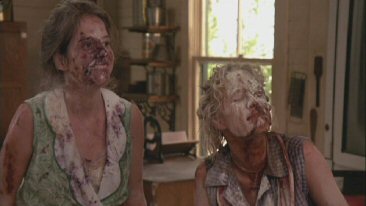
If you look at the bottom of the page there is a picture from Fried Green Tomatoes at the whistle stop cafe
If I was to be totally honest I have chosen these three films for this page because I love them, I prefer Vol 1 to Vol 2 of Kill Bill but realise you need both for it to be whole although I do appreciate that kung fu type feel to the first film. The whistle stop cafe is one of my all time favourites, mind you I like the colour purple. My final choice is Sin City, which although it sickens me in places is visually one of the best films I have ever seen and it is usually Tim Burton that amazes me visually.
Why I like films!
My way of really seeing if I think a film is great is really strange, I press the freeze frame or my pause button on my dvd, it does not matter where you do this. Obviously when Beatrix is buried in Kill Bill Vol 2 it will be pointless as it is black. But once you have done this, look at the still infront of you. Basically it should be like a photograph. Scenes are set up visually like photographs, following the same rules, so the composition should be there. The first time I froze Sin City I was amazed how much like a comic book panel I was looking at. Now that was art. But Frank Miller has had a hand in direction and he is an artist. The most other visually exciting director I watch is Tim Burton, he is visually stunning in his work, to the gothic detail of Batman and Sleepy Hollow or the brillent concept of pastel suburbs in Edward Scissorhands.......
Unlike art though film is governed on popularity, as I feel I have realised as I have looked at Doris rise and fall through film, her talent never left her, it was the public that wanted more, their taste had changed and she wasn't willing to change with it. Visually Down with Love is brillient, it so much reflects one of her early 60s films and maybe that is why it was not well received, a fine film but it was mimicing a style which has had its time.
Kill Bill
"Not to long ago I was quite the professional my friends and I,we were the 'creme de la creme' in an exclusive industry, and we all worked for this man....Bill. Then one day I decided to leave, settle down and start a new life but when I tried to get out, they tried to do me in. Guess they should have tried a little harder........." The Bride
Sin City Trivia
Trivia obtained from the IMDB.Com
After a poor Hollywood experience in the early 1990s, Frank Miller refused to relinquish the movie rights to any of his comic works, "Sin City" in particular. Robert Rodriguez, a longtime fan of the comic, filmed his own "audition" for the director's spot in secret. The footage, shot in early 2004, featured Josh Hartnett and Marley Shelton acting out the "Sin City" short-story "The Customer is Always Right". He presented the finished footage to Miller with the proclamation: "If you like this, this will be the opening to the movie. If not, you'll have your own short film to show your friends." Miller approved of the footage and the film was underway. Rodriguez also screened the footage for each of the actors he wanted to cast in the film - all of whom are reported to have been instantly amazed.
Based on the graphic novels "Sin City" (the first graphic novel was just called "Sin City;" this story has been renamed "The Hard Good-Bye" by Miller), "The Big Fat Kill" and "That Yellow Bastard", by Frank Miller. The opening footage with Josh Hartnett and Marley Shelton is from the Sin City short story "The Customer is Always Right" from the "Babe Wore Red" collection. However, the epilogue featuring Hartnett and Alexis Bledel is an original scene written specifically for the movie.
Directors Robert Rodriguez and Frank Miller planned each shot in the movie by using the panels from the original book as storyboard.
While the three stories in the film are based on "The Hard Goodbye," "The Big Fat Kill" and "That Yellow Bastard" as well as the short "The Customer is Always Right" there is a very brief scene taken from the story "A Dame to Kill For," in which Dwight (Clive Owen) thinks in a voice over in Kadie's Bar how Marv "would have been okay if he'd been born a couple of thousand years ago."
The cover of the Sin City book "Booze, Broads, and Bullets", can be seen periodically throughout the movie. Its most notable appearance is on the cover of the matchbook that Hartigan picks up to locate Nancy; it is also seen in the background of the strip club in the very next scene as Hartigan first enters (to the right as a poster).
Both Nancy (Jessica Alba) and Wendy ('Jaime King' ) drive cars with the license plates "LEV 311". Frank Miller often puts this in his various stories for "favourite girl" character in that story. The number is a nod to his wife and frequent collaborator, Lynn E. Varley whose birthday is 11 March.
As each sequence of this film was shot separately, new cast members were added and incorporated in the stories all the time. Often separate footage was composted in post-production to look as if it was all shot the same day. For example: Marv (Mickey Rourke) takes Wendy (Jaime King) to Nancy's (Jessica Alba) home. Alba had not been cast yet when Rourke and King shot the scene, her footage was added in later. The same is true of the scenes between Marv and Cardinal Roark (Rutger Hauer) and Kevin (Elijah Wood), as Hauer and Wood were cast after Rourke had shot his scenes.
The swords used by Miho (Devon Aoki) in this film are the same ones used by some of the Crazy 88 in Kill Bill: Vol. 1 (2003). That film's director, Quentin Tarantino, had been keeping them in the back of his garage.
Guest director Quentin Tarantino directed the scene involving Dwight (Clive Owen) and Jackie Boy (Benicio Del Toro) in the front of the car, before Dwight is pulled over by a police officer.
Marley Shelton also starred in the 1998 Gary Ross film Pleasantville (1998) which, much like this, employed the same visual technique of showing everything in black and white with only the occasional person, object or scene shown in color.
Robert Rodriguez originally envisioned Johnny Depp in the role of Jackie Boy. Due to prior commitments, Depp could not play the part. While at the Academy Awards, Rodriguez saw Benicio Del Toro with long hair ("Wolf Man" hair, as he describes it) and said that he "was looking at Jackie Boy". He told Del Toro not to cut his hair and mailed him the comic book and a copy of the short, "The Customer is Always Right." Del Toro immediately signed on.
One of the guns used by Hartigan is a Beretta M93R, a gun modified and then used in in the RoboCop movies. Frank Miller wrote RoboCop 2 (1990) and RoboCop 3 (1993).
Director Robert Rodriguez added the music Jessica Alba danced to later; during shooting, she was listening to different music.
Jessica Alba went to strip clubs as a part of her research for her character. However, she said that it didn't help because all the pro-strippers were doing "is trying to get tips".
Christopher Walken, Willem Dafoe, Steve Buscemi and Michael Douglas were all originally offered roles. Douglas was offered the role of Hartigan, Buscemi was offered the part of Junior when he became the Yellow Bastard, and Dafoe and Walken were both offered the role of Senator Roark.
The signature white blood proved hard to achieve on screen. Regular movie blood couldn't provide the stark look. The crew had to use fluorescent red liquid and bathe it in black light. In post-production, the liquid was turned white.
One of the hookers in Old Town is dressed like Wonder Woman. She is seen from the back, wearing a set of star-spangled hot pants and with a golden lasso at her side. She also appears in the original comic, in a nearly identical shot (when Marv is asking about Goldie, just before Wendy takes him down).
When John Hartigan (Bruce Willis) comes into Kadie's Bar, Shellie (Brittany Murphy) is carrying a bottle of "Chango beer". This is the same fictional brand used in other Rodriguez movies including Desperado (1995) and From Dusk Till Dawn (1996).
Robert Rodriguez has said that he does not consider this movie to be an adaptation so much as a translation. This is why there is no screenwriting in the credits. The only mention of writing is Frank Miller as the creator of the graphic novels.
The film, and many of its effects and scoring, were all done in Robert Rodriguez's studio, which is immediately across the street from his home. Because the director refuses to work anywhere else and as such shuns Hollywood traditions, it took his friendship with Bob Weinstein and Harvey Weinstein to make the production of the film possible as no other studios would take a leap on either Rodriguez's methods or such a bizarre film.
When Jackie Boy and his "troops" enter Shellie's apartment, one of them is wearing a t-shirt with a peace sign embedded with a star and flag (the symbol also appears as on of Becky's (Alexis Bledel) earrings). This is the symbol of PAX, the paramilitary peace force from Frank Miller's Martha Washington series of graphic novels, beginning with "Give Me Liberty."
Rodriguez, who credits Miller's visual style in the comic as relevant as his own in the film, insisted that Miller receive a "co-director" credit with him. The Directors' Guild of America would not allow it. As a result, Rodriguez resigned from the DGA, saying "It was easier for me to quietly resign before shooting because otherwise I'd be forced to make compromises I was unwilling to make or set a precedent that might hurt the guild later on." Unfortunately, by resigning from the DGA, Rodriguez was also forced to relinquish his director's seat on the film John Carter of Mars (2006) (at the time "A Princess of Mars" after the book on which it was based) for Paramount. Rodriguez had already signed-on and been announced as director of that film when the DGA situation took place, planning to begin filming soon after wrapping this film.
Robert Rodriguez scored Kill Bill: Vol. 2 (2004) for $1. Quentin Tarantino said he would repay him by directing a segment of this movie for $1. Tarantino, a vocal proponent of film-over-digital, has said that he was curious to get hands-on experience with the HD cameras which Rodriguez lauds. When asked about his experience, Tarantino merely replied, "Mission Accomplished."
This was one of several films around the world to be shot on a completely "digital backlot" (i.e. with all the acting shot in front of a green screen and the backgrounds added during post-production). While the other movies (Immortel (ad vitam) (2004), Sky Captain and the World of Tomorrow (2004), and Casshern (2004) - two of which were shot on film) were shot first, this movie's use of High-Definition digital cameras (like "Sky Captain") in addition to the "backlot" method makes Sin City one of the world's first "fully-digital" live action motion pictures.
Originally, the film was going to include the story featured in the "Sin City" maxi-series "Hell And Back", with Johnny Depp in the lead role as Wallace. This was scrapped before production began but will most likely be filmed for a sequel as Rodriguez plans to film all of Miller's stories at some point.
Leonardo DiCaprio was originally up for the role of Junior but eventually declined the role, which later went to Nick Stahl.
Kate Bosworth was the first choice for the role of Gail.
Footage had been so coveted by fans before its release that when a 27-second behind-the-scenes clip appeared on "Entertainment Tonight" (1981) (airdate: 19 May 2004), it was quickly (though not officially by the show) placed on the Internet and downloaded over one million times. The raw footage featured only quick shots of Bruce Willis and a scantily-clad Jessica Alba performing in front of green-screen.
Although several of the actors already looked similar to their characters, some of them underwent make-up and prosthetics to more strongly resemble their Miller-drawn likenesses, including Bruce Willis, Mickey Rourke, Benicio Del Toro, and Nick Stahl.
Although the movie is presented primarily in black and white, particular items are in color and, as such, had to be colored blue or green on set. According to Robert Rodriguez, Nick Stahl (who plays The Yellow Bastard) was known on set as "The Blue Bastard". The reason Yellow Bastard had to be painted blue was because yellow, like green, reacts with the green screen. This causes the color to spill into the background, making them impossible to separate.
Cameo: [Frank Miller] the co-director and creator of the original comic series has a cameo as a priest.
Jessica Alba did not know how racy the images of her character Nancy were in the comic until after she signed on for the film. The film's script originally had several nude scenes for the character, but Alba refused to do any nudity. Rodriguez and Miller didn't think it was important for there to be nudity, so they didn't care.
In the graphic novel, the Yellow Bastard's (Nick Stahl) car is an Atlantic '57C Bugatti. However, it was changed to a 1936 Cadillac Limo for the film because it would've cost over $230,000 to use the Bugatti for four shooting days. Also, the Yellow Bastard's license plate is "TYB 069." The first half is TYB, the initials for the story "That Yellow Bastard."
Robert Rodriguez originally asked Hans Zimmer to score the music, but Zimmer couldn't accept it, cause at the time he was in England preparing Batman Begins (2005). Zimmer recommended John Debney and Graeme Revell, both are friends of the German composer.
The text of the newspaper shown during "The Hard Goodbye" has a written transcript of the opening scene and "The Hard Goodbye". The author of the article is F. Miller. Accoring to the paper, the story either takes place in 1993 or 1999.
Michael Madsen was briefly considered for the role of Marv before Mickey Rourke was cast. He was eventually casted as Bob.
Although the grand majority of the movie was shot against green-screen, there were three practical (i.e. hand-built) sets created:
Kadie's bar
Shellie's apartment
the hospital in the epilogue.
Jessica Simpson auditioned for the Role of Nancy Callahan
It was Benicio Del Toro's idea to have Jackie Boy pry the gun out of his cut off hand using his teeth.
Because of the way the movie was shot, Mickey Rourke (Marv) and Elijah Wood (Kevin) never met until after the movie was released.
According to an interview with Latino Review, Michael Madsen landed the role of Bob by approaching Robert Rodriguez at the Kill Bill wrap party and simply asked how come he hadn't been cast in Sin City. Rodriguez obliged, casting Madsen as the only part they hadn't cast yet, Bob.
The shape of Elijah Wood's chin was changed subtlety in post-production to give him a more unsettling appearance.
On a night between filming days, Robert Rodriguez put on a rock concert at a local nightclub. His own band was the opening act, and the headliner was Bruce Willis and his band, The Accelerators. The concert was attended by Sin City's cast and crew, as well as the cast and crew of A Scanner Darkly (2006), which was filming nearby at the same time. All profits from the show were donated to charity.
Despite appearing in all three of the major stories, Brittany Murphy filmed all of her scenes in one day.
SPOILER: The scene that Quentin Tarantino directed is the drive to the pits scene in which Dwight (Clive Owen) talks with a very dead Jackie Boy (Benicio Del Toro). When Tarantino insisted on a real car being built for the shooting Robert Rodriguez told him that it would be easier without one. After shooting a few takes with the real car, Tarantino realized his friend was right. Tarantino also came up with the idea of Jackie Boy's slit throat affecting his speech and Dwight speaking his internal monologue rather than dubbing it in later.
After a poor Hollywood experience in the early 1990s, Frank Miller refused to relinquish the movie rights to any of his comic works, "Sin City" in particular. Robert Rodriguez, a longtime fan of the comic, filmed his own "audition" for the director's spot in secret. The footage, shot in early 2004, featured Josh Hartnett and Marley Shelton acting out the "Sin City" short-story "The Customer is Always Right". He presented the finished footage to Miller with the proclamation: "If you like this, this will be the opening to the movie. If not, you'll have your own short film to show your friends." Miller approved of the footage and the film was underway. Rodriguez also screened the footage for each of the actors he wanted to cast in the film - all of whom are reported to have been instantly amazed.
Based on the graphic novels "Sin City" (the first graphic novel was just called "Sin City;" this story has been renamed "The Hard Good-Bye" by Miller), "The Big Fat Kill" and "That Yellow Bastard", by Frank Miller. The opening footage with Josh Hartnett and Marley Shelton is from the Sin City short story "The Customer is Always Right" from the "Babe Wore Red" collection. However, the epilogue featuring Hartnett and Alexis Bledel is an original scene written specifically for the movie.
Directors Robert Rodriguez and Frank Miller planned each shot in the movie by using the panels from the original book as storyboard.
While the three stories in the film are based on "The Hard Goodbye," "The Big Fat Kill" and "That Yellow Bastard" as well as the short "The Customer is Always Right" there is a very brief scene taken from the story "A Dame to Kill For," in which Dwight (Clive Owen) thinks in a voice over in Kadie's Bar how Marv "would have been okay if he'd been born a couple of thousand years ago."
The cover of the Sin City book "Booze, Broads, and Bullets", can be seen periodically throughout the movie. Its most notable appearance is on the cover of the matchbook that Hartigan picks up to locate Nancy; it is also seen in the background of the strip club in the very next scene as Hartigan first enters (to the right as a poster).
Both Nancy (Jessica Alba) and Wendy ('Jaime King' ) drive cars with the license plates "LEV 311". Frank Miller often puts this in his various stories for "favourite girl" character in that story. The number is a nod to his wife and frequent collaborator, Lynn E. Varley whose birthday is 11 March.
As each sequence of this film was shot separately, new cast members were added and incorporated in the stories all the time. Often separate footage was composted in post-production to look as if it was all shot the same day. For example: Marv (Mickey Rourke) takes Wendy (Jaime King) to Nancy's (Jessica Alba) home. Alba had not been cast yet when Rourke and King shot the scene, her footage was added in later. The same is true of the scenes between Marv and Cardinal Roark (Rutger Hauer) and Kevin (Elijah Wood), as Hauer and Wood were cast after Rourke had shot his scenes.
The swords used by Miho (Devon Aoki) in this film are the same ones used by some of the Crazy 88 in Kill Bill: Vol. 1 (2003). That film's director, Quentin Tarantino, had been keeping them in the back of his garage.
Guest director Quentin Tarantino directed the scene involving Dwight (Clive Owen) and Jackie Boy (Benicio Del Toro) in the front of the car, before Dwight is pulled over by a police officer.
Marley Shelton also starred in the 1998 Gary Ross film Pleasantville (1998) which, much like this, employed the same visual technique of showing everything in black and white with only the occasional person, object or scene shown in color.
Robert Rodriguez originally envisioned Johnny Depp in the role of Jackie Boy. Due to prior commitments, Depp could not play the part. While at the Academy Awards, Rodriguez saw Benicio Del Toro with long hair ("Wolf Man" hair, as he describes it) and said that he "was looking at Jackie Boy". He told Del Toro not to cut his hair and mailed him the comic book and a copy of the short, "The Customer is Always Right." Del Toro immediately signed on.
One of the guns used by Hartigan is a Beretta M93R, a gun modified and then used in in the RoboCop movies. Frank Miller wrote RoboCop 2 (1990) and RoboCop 3 (1993).
Director Robert Rodriguez added the music Jessica Alba danced to later; during shooting, she was listening to different music.
Jessica Alba went to strip clubs as a part of her research for her character. However, she said that it didn't help because all the pro-strippers were doing "is trying to get tips".
Christopher Walken, Willem Dafoe, Steve Buscemi and Michael Douglas were all originally offered roles. Douglas was offered the role of Hartigan, Buscemi was offered the part of Junior when he became the Yellow Bastard, and Dafoe and Walken were both offered the role of Senator Roark.
The signature white blood proved hard to achieve on screen. Regular movie blood couldn't provide the stark look. The crew had to use fluorescent red liquid and bathe it in black light. In post-production, the liquid was turned white.
One of the hookers in Old Town is dressed like Wonder Woman. She is seen from the back, wearing a set of star-spangled hot pants and with a golden lasso at her side. She also appears in the original comic, in a nearly identical shot (when Marv is asking about Goldie, just before Wendy takes him down).
When John Hartigan (Bruce Willis) comes into Kadie's Bar, Shellie (Brittany Murphy) is carrying a bottle of "Chango beer". This is the same fictional brand used in other Rodriguez movies including Desperado (1995) and From Dusk Till Dawn (1996).
Robert Rodriguez has said that he does not consider this movie to be an adaptation so much as a translation. This is why there is no screenwriting in the credits. The only mention of writing is Frank Miller as the creator of the graphic novels.
The film, and many of its effects and scoring, were all done in Robert Rodriguez's studio, which is immediately across the street from his home. Because the director refuses to work anywhere else and as such shuns Hollywood traditions, it took his friendship with Bob Weinstein and Harvey Weinstein to make the production of the film possible as no other studios would take a leap on either Rodriguez's methods or such a bizarre film.
When Jackie Boy and his "troops" enter Shellie's apartment, one of them is wearing a t-shirt with a peace sign embedded with a star and flag (the symbol also appears as on of Becky's (Alexis Bledel) earrings). This is the symbol of PAX, the paramilitary peace force from Frank Miller's Martha Washington series of graphic novels, beginning with "Give Me Liberty."
Rodriguez, who credits Miller's visual style in the comic as relevant as his own in the film, insisted that Miller receive a "co-director" credit with him. The Directors' Guild of America would not allow it. As a result, Rodriguez resigned from the DGA, saying "It was easier for me to quietly resign before shooting because otherwise I'd be forced to make compromises I was unwilling to make or set a precedent that might hurt the guild later on." Unfortunately, by resigning from the DGA, Rodriguez was also forced to relinquish his director's seat on the film John Carter of Mars (2006) (at the time "A Princess of Mars" after the book on which it was based) for Paramount. Rodriguez had already signed-on and been announced as director of that film when the DGA situation took place, planning to begin filming soon after wrapping this film.
Robert Rodriguez scored Kill Bill: Vol. 2 (2004) for $1. Quentin Tarantino said he would repay him by directing a segment of this movie for $1. Tarantino, a vocal proponent of film-over-digital, has said that he was curious to get hands-on experience with the HD cameras which Rodriguez lauds. When asked about his experience, Tarantino merely replied, "Mission Accomplished."
This was one of several films around the world to be shot on a completely "digital backlot" (i.e. with all the acting shot in front of a green screen and the backgrounds added during post-production). While the other movies (Immortel (ad vitam) (2004), Sky Captain and the World of Tomorrow (2004), and Casshern (2004) - two of which were shot on film) were shot first, this movie's use of High-Definition digital cameras (like "Sky Captain") in addition to the "backlot" method makes Sin City one of the world's first "fully-digital" live action motion pictures.
Originally, the film was going to include the story featured in the "Sin City" maxi-series "Hell And Back", with Johnny Depp in the lead role as Wallace. This was scrapped before production began but will most likely be filmed for a sequel as Rodriguez plans to film all of Miller's stories at some point.
Leonardo DiCaprio was originally up for the role of Junior but eventually declined the role, which later went to Nick Stahl.
Kate Bosworth was the first choice for the role of Gail.
Footage had been so coveted by fans before its release that when a 27-second behind-the-scenes clip appeared on "Entertainment Tonight" (1981) (airdate: 19 May 2004), it was quickly (though not officially by the show) placed on the Internet and downloaded over one million times. The raw footage featured only quick shots of Bruce Willis and a scantily-clad Jessica Alba performing in front of green-screen.
Although several of the actors already looked similar to their characters, some of them underwent make-up and prosthetics to more strongly resemble their Miller-drawn likenesses, including Bruce Willis, Mickey Rourke, Benicio Del Toro, and Nick Stahl.
Although the movie is presented primarily in black and white, particular items are in color and, as such, had to be colored blue or green on set. According to Robert Rodriguez, Nick Stahl (who plays The Yellow Bastard) was known on set as "The Blue Bastard". The reason Yellow Bastard had to be painted blue was because yellow, like green, reacts with the green screen. This causes the color to spill into the background, making them impossible to separate.
Cameo: [Frank Miller] the co-director and creator of the original comic series has a cameo as a priest.
Jessica Alba did not know how racy the images of her character Nancy were in the comic until after she signed on for the film. The film's script originally had several nude scenes for the character, but Alba refused to do any nudity. Rodriguez and Miller didn't think it was important for there to be nudity, so they didn't care.
In the graphic novel, the Yellow Bastard's (Nick Stahl) car is an Atlantic '57C Bugatti. However, it was changed to a 1936 Cadillac Limo for the film because it would've cost over $230,000 to use the Bugatti for four shooting days. Also, the Yellow Bastard's license plate is "TYB 069." The first half is TYB, the initials for the story "That Yellow Bastard."
Robert Rodriguez originally asked Hans Zimmer to score the music, but Zimmer couldn't accept it, cause at the time he was in England preparing Batman Begins (2005). Zimmer recommended John Debney and Graeme Revell, both are friends of the German composer.
The text of the newspaper shown during "The Hard Goodbye" has a written transcript of the opening scene and "The Hard Goodbye". The author of the article is F. Miller. Accoring to the paper, the story either takes place in 1993 or 1999.
Michael Madsen was briefly considered for the role of Marv before Mickey Rourke was cast. He was eventually casted as Bob.
Although the grand majority of the movie was shot against green-screen, there were three practical (i.e. hand-built) sets created:
Kadie's bar
Shellie's apartment
the hospital in the epilogue.
Jessica Simpson auditioned for the Role of Nancy Callahan
It was Benicio Del Toro's idea to have Jackie Boy pry the gun out of his cut off hand using his teeth.
Because of the way the movie was shot, Mickey Rourke (Marv) and Elijah Wood (Kevin) never met until after the movie was released.
According to an interview with Latino Review, Michael Madsen landed the role of Bob by approaching Robert Rodriguez at the Kill Bill wrap party and simply asked how come he hadn't been cast in Sin City. Rodriguez obliged, casting Madsen as the only part they hadn't cast yet, Bob.
The shape of Elijah Wood's chin was changed subtlety in post-production to give him a more unsettling appearance.
On a night between filming days, Robert Rodriguez put on a rock concert at a local nightclub. His own band was the opening act, and the headliner was Bruce Willis and his band, The Accelerators. The concert was attended by Sin City's cast and crew, as well as the cast and crew of A Scanner Darkly (2006), which was filming nearby at the same time. All profits from the show were donated to charity.
Despite appearing in all three of the major stories, Brittany Murphy filmed all of her scenes in one day.
SPOILER: The scene that Quentin Tarantino directed is the drive to the pits scene in which Dwight (Clive Owen) talks with a very dead Jackie Boy (Benicio Del Toro). When Tarantino insisted on a real car being built for the shooting Robert Rodriguez told him that it would be easier without one. After shooting a few takes with the real car, Tarantino realized his friend was right. Tarantino also came up with the idea of Jackie Boy's slit throat affecting his speech and Dwight speaking his internal monologue rather than dubbing it in later.
Kill Bill Vol 1
Trivia for Kill Bill Vol 1 obtained from IMDB.Com
Quentin Tarantino delayed the start of the production because Uma Thurman was pregnant.
Warren Beatty was originally offered the role of Bill. After turning it down, he suggested to Quentin Tarantino that he use David Carradine.
Uma Thurman was offered the script to Kill Bill, and her role as "The Bride", as a 30th Birthday present from Quentin Tarantino.
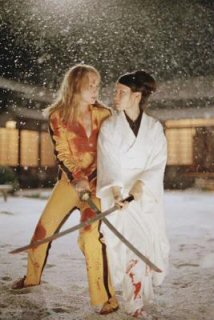
Uma Thurman's yellow track-suit is a direct homage to the one worn by Bruce Lee in Game of Death (1978).
In order to achieve the specific look of Chinese "wuxia" (martial arts) film of the 1970s, Quentin Tarantino gave director of photography, Robert Richardson, an extensive list of genre films as a crash-course in the visual style they used. The list included films by genre-pioneers Cheh Chang and the Shaw Brothers. Tarantino also forbade the use of digital effects and "professional" gags and squibs. As such, he insisted that bloody spurts be done in the fashion made popular by Chang Cheh: Chinese condoms full of fake blood that would splatter on impact.
Part of the movie was shot at the legendary Shaw Bros. studio in Hong Kong. Quentin Tarantino has seen so many movies made at the studio that he felt it was important for him to work there.
During production, Quentin Tarantino wrote new scenes as he shot thus compiling massive amounts of footage.
The Tokyo miniature sets were leftovers from the then most recent Godzilla film (Gojira, Mosura, Kingu Gidorâ: Daikaijû sôkôgeki (2001)).
Quentin Tarantino revealed in an interview that the music used in Kill Bill was all from other films; he used music from his soundtrack collection.
Quentin Tarantino has confirmed in interviews that the "Deadly Viper Assassination Squad (DiVAS)" was inspired by "Fox Force Five," the fictional television show that Mia Wallace (Uma Thurman) filmed in Pulp Fiction (1994).
Christopher Allen Nelson, who worked on the special effects, revealed in interview that over 450 gallons of fake blood were used on the two Kill Bill movies.
Kevin Costner was also considered for the title role of "Bill", but he turned it down to do Open Range (2003) instead.
Director Trademark: [Quentin Tarantino] [Trunk Shot] While The Bride is interrogating Sofie Fatale, we see from Sofie's point of view inside the trunk of her own car looking up at the masked Bride.
Director Trademark: [Quentin Tarantino] [bare feet] Lucy Liu is barefoot as she runs to kill Boss Tanaka. The band at the House of Blue Leaves is barefoot. The Bride is barefoot as she escapes from the hospital and tries to regain control of her legs.
According to Quentin Tarantino, Sonny Chiba's character, Hattori Hanzo, is meant to be the most recent descendant of his character(s) from "Hattori Hanzô: Kage no Gundan" (1980). The series was done in multiple various installments, in which Chiba would play Hanzo a generation removed from the previous installment.
Vernita Green's (Vivica A. Fox) original codename was 'Cobra' before it was changed to 'Copperhead'.
The closing title card, "Based on the character of 'The Bride' created by Q & U", refers to the first initials of Quentin Tarantino and Uma Thurman.
The members of the Deadly Viper Assassination Squad are all named for snakes: Sidewinder, Black Mamba, Cottonmouth, Copperhead, and California Mountain (King) snake. They are also the names of enemies of Captain America.
The tune whistled by Daryl Hannah's character in the hospital hallway is the same as that whistled by the strange young man in Twisted Nerve (1968). During his 1996 film festival in Austin, Texas, Quentin Tarantino screened Twisted Nerve.
Quentin Tarantino and Miramax bought the rights to the theme song from Du bi quan wang da po xue di zi (1975), which is featured in Kill Bill. Entitled "Super 16", it was performed by Neu!
The masks worn by the Crazy 88 gang are homage to Kato's (Bruce Lee) mask in "The Green Hornet" (1966)
The black and white photography is ultimately an homage to '70s and '80s US television airings of kung fu movies. Black and white (as well as black and red), were used to conceal the shedding of blood from television censors. Originally, no black and white photographic effects were going to be used (and in the Japanese version none are), but the MPAA demanded measures be taken to tone the scene down. Tarantino merely used the old trick for its intended purpose, rather than merely as an homage.
When the Bride says the word "square" to Copperhead, she draws three sides of a square in the air with her finger. Uma Thurman's character in Pulp Fiction (1994) did nearly the same thing, except drew all 4 sides of the square.
Michael Parks plays Sheriff Earl McGraw, the same character that the Gecko brothers killed at the beginning of the Quentin Tarantino-written From Dusk Till Dawn (1996). Also, Parks' real son, James Parks, reprises his own role of Deputy McGraw ("Son #1") from From Dusk Till Dawn 2: Texas Blood Money (1999) (V).
br>Buck, the male nurse who lets his friend in to have sex with The Bride says "Are we absolutely clear on Rule #1?" This same line was used by George Clooney in From Dusk Till Dawn (1996).
As the detectives walk into the destroyed wedding chapel with bodies on the floor, the radio starts. Before it gets to the right song, someone can be heard singing "¿Dónde Està?". In the Reservoir Dogs (1992) torture scene, the same sound bite is heard before Mr. Blonde changes the station to K-BILLY.
The original script featured the Bill character to be a master chemist. The liquid in the syringe was pointed out to be a concoction created by Bill entitled "Goodbye Forever". These potions/elixirs were to be detailed by onscreen subtitles. The Bride would also use a mix called "The Undisputed Truth" to get information from Sofie Fatale. In _Vol. 2 (2004)_ , Bill would use "The Undisputed Truth" on the Bride.
In the original script, Johnny Mo was called Mr. Barrel. He had a Kato mask on a stick, like someone from a 17th Century costume ball. Mr. Barrel didn't like the rubber bands on the typical Kato masks because they 'fucked up his hair'. The Bride convinces him not to fight her, and he walks away, leaving O-Ren with no bodyguards.
The entrance to the traffic tunnel in Tokyo is in fact the entrance to the second street tunnel in Los Angeles (Blade Runner) with Japanese traffic signs added.
"The Bells" sign seen on the letterbox at the beginning of Chapter One was given to Uma Thurman's stunt double Zoe Bell by Quentin Tarantino. Bell presented it to her parents, The Bells.
Earl McGraw (Michael Parks) calling his son "son number one" is a reference to the Charlie Chan movies.
Buck (the nurse played by Michael Bowen) has the same "Elvis" sunglasses as Clarence Worley (Christian Slater) in True Romance (1993).
The "Old Klingon Proverb": "Revenge is a dish best served cold" is from a joke in Star Trek: The Wrath of Khan (1982). (The quote is actually from the book "Les Liaisons Dangereuses" (1782) by Choderlos de Laclos).
The sequences where an extreme close-up of the Bride's eyes is shown, juxtaposed with footage of the betrayal, whenever she sees a target of her revenge is taken verbatim from Da uomo a uomo (1968).
The music played when The Bride gets ready to fight Copperhead and Cottonmouth is the theme from "Ironside" (1967). In its first episode, the main character was shot and left for dead, then found his legs didn't work, and set out to find those who did it. This music was also used in a similar manner in the 1973 Kung Fu classic _Tian xia di yi quan (1973)_ (The Five Fingers of Death).
The music played when The Bride arrives in Tokyo is the theme from "The Green Hornet" (1966), a TV series referenced earlier in the film.
The theme from "The Green Hornet" (1966) series played during the Bride's motorcycle ride through Tokyo is actually a re-arrangement of the classical piece "Flight of the Bumblebee" from Nikolai Rimsky-Korsakov's opera "The Tale of Tsar Sultan" (1899). Interestingly, The Bride is donned in yellow with black stripes for this scene, which of course are the colors of the bumble bee.
Buck's line, "My name is Buck, and I came here to fuck" was originally said by Robert Englund in Eaten Alive (1977)
The row-of-sunglasses-on-the-Sheriff's-dashboard gag is a direct lift from the opening scene of the original Gone in 60 Seconds (1974)
The Japanese symbols on the background of the poster spell "kirubiru" which is the Japanese spelling for "Kill Bill".
When The Bride stands over the remains of the Crazy 88s, a masked Quentin Tarantino is among them.
The many-on-one fight at the House of Blue Leaves references the Bruce Lee film Jing wu men (1972) (aka Fist of Fury, aka The Chinese Connection) at several parts, including the surrounding mob's fear when the main character strikes a fighting stance. Also, in each fight the hero eventually dives to the floor and attacks their opponents' legs.
Director Trademark: [Quentin Tarantino] [long take] After the Bride leaves O-Ren's door at the House of Blue Leaves (when Go-Go returns inside) we follow her down the stairs through the bar, past the kitchen, into the ladies room; we then go out of the ladies' room, back to the stairs and follow Sofie Fatale along the exact same path to the ladies' room, ending with the ring of her cellphone. All in a single take.
Vernita Green (Vivica A. Fox) complains about being given a codename she doesn't like. Mr. Pink (Steve Buscemi) had a similar argument in Reservoir Dogs (1992).
The license plate for Buck's truck is a Texas plate that reads PSY WGN.
Quentin Tarantino had intended for three actors of different nationalities to represent their respective countries. Chia Hui Liu represents China, Sonny Chiba represents Japan, and David Carradine represents the United States. Tarantino said that had Bruce Lee still been alive he'd have been asked to appear in Kill Bill as well.
The church scene was shot in the Mojave Desert outside of Lancaster, CA. Keep an eye out during this scene for a cameo by Samuel L. Jackson as the dead organ player and Bo Svenson as the preacher.
During filming, actors often provided a "Hello, Sally!" take. This involves the actor finishing his or her take, turning to face the camera, and yelling "Hello, Sally!". Whether editor Sally Menke appreciates this is yet to be reported.
Chapter 2 is entitled "The Blood Splattered Bride," a reference to the movie Novia ensangrentada, La (1972) (released in the US as The Blood Spattered Bride).
Okinawa is widely regarded as one of the worst possible places to get good sushi. In other words, a sushi joint in Okinawa would make a fine hiding place.
During the sword ceremony scene when Sonny Chiba's character Hattori Hanzo gives Uma Thurman his recently forged sword he tells her "If, on your journey, you should encounter god, god will be cut" which is a phrase taken from the Kinji Fukasaku film Makai tenshô (1981) (aka Samurai Reincarnation) when the sword maker gives Sonny Chiba's character Jubei a sword that he has forged in order to destroy his undead enemies.
Approximatly US$60,000 of the movie's budget was used for producing swords and sword accessories.
The infamous long take scene took 6 hours to rehearse but it was shot in one take. After that, Steadicam operator Larry McConkey was rumored to have passed out in exhaustion.
In the restaurant, the Bride kills 57 people.
The production spent $65,000 on swords.
Became the first film to be rated R in Canada under the new Canadian rating system. Under the old Canadian rating system, an 18A meant that anyone under the age of 18 must be accompanied by someone that age or older. In the new Canadian rating system, R means people under 18 are prohibited from watching the movie.
The original trailer for this film, although featuring no actual bloodshed, raised the ire of the MPAA with the sight of The Bride's blood-stained clothes. As such it became the first to be subjected to the MPAA's new "no blood" policy for trailers, in which all sight of the bodily fluid must be alternately colored or removed entirely. This is why the trailers for this film (and similarly for every film released in the US thereafter) feature The Bride's clothes covered in blackish-brown stains where the blood would be.
When Chiaki Kuriyama (Gogo) was shooting the scene where she flings her ball and chain out, she accidentally hit Quentin Tarantino on the head while he stood by the camera.
Sonny Chiba makes katanas in real life. In the movie, his character Hattori Hanzo is a renowned katana maker who has taken a blood oath to never create an instrument of death again.
To entice cinematographer Robert Richardson to work on the project, Quentin Tarantino had the script sent to his house on Valentine's Day 2002... along with a bouquet of roses.
Director Quentin Tarantino was a big fan or the Japanese movie Batoru rowaiaru (2000) so he cast Chiaki Kuriyama (who played Takako Chigusa in Batoru rowaiaru (2000)) as Gogo Yubari.
The eerie background music playing after The Bride attacks the rapist is from the Lucio Fulci film Sette note in nero (1977).
The music sampled for "Ode to O-Ren Ishii" is the title track from the film Sette note in nero (1977). Since an instrumental version is not included on the soundtrack, it has become an increasingly popular download.
Quentin Tarantino chose Jun Kunimura to be Boss Tanaka after seeing him scream in Koroshiya 1 (2001).
Quentin Tarantino owns the "Pussy Wagon" and drove as his everyday vehicle to promote the release of _Vol. 2 (2004)_ . He licensed use of it for the Missy 'Misdemeanor' Elliott music video, "I'm Really Hot".
Despite being bleeped out in the film, the name of The Bride is revealed on her plane tickets to Okinawa and Tokyo.
Quentin Tarantino has said in interviews that, had Warren Beatty taken the part of Bill, the character would have been more of a suave, James Bond-type.
The Japanese song that plays after the sword fight between The Bride and O-Ren is the theme song from Shurayukihime (1973) (Lady Snowblood). The song is entitled "Shura no hana" ("Flower of Carnage"), and the vocals are by that film's star, Meiko Kaji.
The Japanese song that plays over the closing credits of both Vol. 1 and Vol. 2 is the theme song from the Joshuu Sasori (Female Convict Scorpion) series of films. The song is entitled "Urami Bushi" ("Grudge Song"), and it is performed by the star of the first four Scorpion films, Meiko Kaji.
Quentin Tarantino originally intended to cast a Japanese actress to play O-Ren Ishii, but before casting began he saw Lucy Liu's work in Shanghai Noon (2000) and immediately changed O-Ren into a Chinese-Japanese American so that Liu could play the part.
The characters streaming down the left side of the screen in the opening scenes are Japanese kanji and hiragana, and they read "Hana yome ga kuru, hana yome ga kuru." Or: "The Bride is coming, the Bride is coming," over and over again.
In Hattori Hanzo's sushi restaurant, there is a 4-character Chinese saying hanging above the bar. It says "zui sheng meng si," literally "drunk birth, dream death." A rough meaningful translation is "To lead an unimportant and often dissipated life."
Daryl Hannah's character is called "Elle Driver." The production team for the documentary Full Tilt Boogie (1997), a documentary about the production of From Dusk Till Dawn (1996) (which starred Quentin Tarantino), is also called " L. Driver Productions".
There is an homage to Citizen Kane (1941) in the early moments of the film. As Black Mamba lies in a coma, she is silhouetted against a background of the window of her hospital room. Suddenly, soft lights turn on through the window which mimics Charles Foster Kane at the moment he dies.
The box that Vernita Green has the gun in is "KaBoom!" cereal.
The cartoon map graphics, showing the Bride's plane traveling across the world, are also used in Jackie Brown (1997).
Parts of the music in the anime sequence come from the Sweetwater theme in C'era una volta il West (1968).
The owner of The House of the Blue Leaves is called Charlie Brown (by O-Ren crew and in the closing credits). He is wearing a orange/yellow jacket with a zigzag black stripe just like Charlie Brown from the Peanuts.
The House of Blue Leaves battle is an homage to the similarly chaotic China Palace Shootout in Michael Cimino's Year of the Dragon (1985).
The character Gogo was originally written as two characters: the twin Yubari sisters, Gogo and Yuki. Gogo had almost no lines and after her death at the hands of The Bride, Yuki would seek her out, only to be killed as well, in the "lost" chapter "Yuki's Revenge". All of Gogo's dialogue in the final film would have been spoken by Yuki.
The sequence where the Bride fights behind the blue-screen and we can see her silhouette, is a reference to SF: Episode One (1998).
The shot where the Bride splits a baseball in two with a samurai sword was done for real on the set. It was done by Zoe Bell, Uma Thurman's stunt double.
On the The Making of 'Kill Bill' (2003) (TV) Tarantino noted that the split screen scene where Elle is about to enter the bride's room and kill her was an homage to Brian De Palma.
When The Bride is standing outside Vernita Green's house, an ice cream truck jingle is played. In the original script, Yuki Yubari (attempting to avenge the death of her sister, Gogo) stalked The Bride in an ice cream truck.
The opening shot is a reference to a similar scene in Buono, il brutto, il cattivo, Il (1966) in which Eli Wallach points a gun at Clint Eastwood, who is near-death from dehydration and being out in the sun for hours and hours.
Sofie Fatale's cell phone ring is "Auld Lang Syne", specifically the tune for the line, "Should old acquaintance be forgot".
Julie Dreyfus, speaks three different languages in the movie. She speaks fluent Japanese until the end where she speaks in her native French to insult the Bride (Uma Thurman) and then in clear English when she talks to Bill. In real life, Julie Dreyfus is trilingual
The view of the trees through the windows of the Bride's hospital room just before Elle, dressed as a nurse, enters is taken from Mandalay Pictures' ID.
According to Shingon belief in Japan, the number 88 represents all the evil in the world. You can do a tour of 88 Buddhist temples to free yourself from all these evils. The tour of these temples is the subject of another Chiaki Kuriyama film, Shikoku (1999).
It took six years to write the entire script before being split into two parts. The original draft was about 220 pages long.
When the Bride arrives at the Tokyo airport, she walks in front of a Red Apple Cigarettes advertisement. Red Apple is a "Tarantino brand." An example of another usage of Red Apple cigarettes comes from Pulp Fiction (1994), in which Bruce Willis's Butch smoked them.
This became the first feature-length film directed by Quentin Tarantino to feature fewer than 100 uses of the word "fuck." It is used 17 times.
In the animated sequence, when O-Ren is getting her revenge, the line "Look at me closely. Do I look like someone you may have killed?" is taken directly from Lady Snowblood, except Snowblood says "raped" instead of "killed."
Gogo Yubari is not a real Japanese name. "Gogo" derives from Mach GoGoGo (aka Speed Racer) , a Japanese anime that Quentin Tarantino liked when he was young. Yubari is the name of a small town in Hokkaido, northern Japan, that is famous for melons and film. Tarantino's first visit to Japan was to showcase Reservoir Dogs (1992) at the Yubari International Fantastic Film Festival.
Julie Dreyfus, who plays Sofie Fatale in the movie, is seen on the Tokyo billboards advertising Red Apple Cigarettes. Red Apple is a fictional brand that appears in every Tarantino movie.
SPOILER: Quentin Tarantino and producer Harvey Weinstein have been quoted as saying that Kill Bill was separated into two parts well into production. By splitting the movie into two parts, the film's advertising tagline, "In 2003, Uma Thurman Will Kill Bill!" was made false.
SPOILER: Originally, Quentin Tarantino wanted Michael Madsen to play Johnny Mo (Mr. Barrel in the original script). However, he decided that Madsen would be better as Bill's brother, so he had Madsen play Budd instead.
SPOILER: David Carradine confirmed that the killer of O-Ren's parents (during the animated sequence) is Bill.
SPOILER: The line that O-Ren and The Bride speak together in the House of Blue Leaves - "Silly rabbit / Trix are for kids" - refers to an advertising slogan for breakfast cereal. It is also a cryptic reference to The Bride's name.
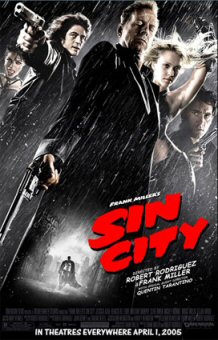
Sin City
"A movie of such high style, done in such a spirit of electrifying fun and creativity, that it kisses the blood right off its own violent hands."
-- Michael Wilmington, CHICAGO TRIBUNE
-- Michael Wilmington, CHICAGO TRIBUNE
......................at the Whistle Stop Cafe
"My Daddy always used to say there was a separate God for Children."
"You're just a beecharmer, Idgie Threadgoode,
that's what you are, a bee charmer"
"Idgie opened the place at daybreak and didn't close the place until, as she said, 'The last dog was hung'..."
Okay that is exciting as it gets, just a few quotes, but I am a sucker for this film. And I cry every time I watch it, as to the picture.....why I chose the picture? I just like how that seen finish's with them looking foolish, so that is why it is that picture
"You're just a beecharmer, Idgie Threadgoode,
that's what you are, a bee charmer"
"Idgie opened the place at daybreak and didn't close the place until, as she said, 'The last dog was hung'..."
Okay that is exciting as it gets, just a few quotes, but I am a sucker for this film. And I cry every time I watch it, as to the picture.....why I chose the picture? I just like how that seen finish's with them looking foolish, so that is why it is that picture